
News
Test It Small. Or Wear It Big.
“I’ve read enough. Other guys are doing it. Let’s just roll it out.”
That’s the moment most expensive mistakes start in beekeeping.
Not the moment something fails. The moment you decide to skip the test and go straight to the whole operation.
A new treatment, a new feed regime, a new splitting protocol — they all look great on paper. Until you put them across two thousand hives and find out what they actually cost you in dollars, in hours, and in the gear you’ve now committed to.
Confidence is not a substitute for data.
Every season I watch experienced operators — good ones — make decisions on a hunch. They read an article. They hear something at a field day. A mate says it’s working. So they commit.
Whole operation. One pass. No comparison.
Six weeks later they’re standing in front of a yard wondering why the new approach took twice as long, cost more than they thought, and they still can’t tell what actually moved — the treatment, the weather, the flow, or the bees.
They don’t know. Because they didn’t set it up to know.
That’s not boldness. That’s gambling with your year.
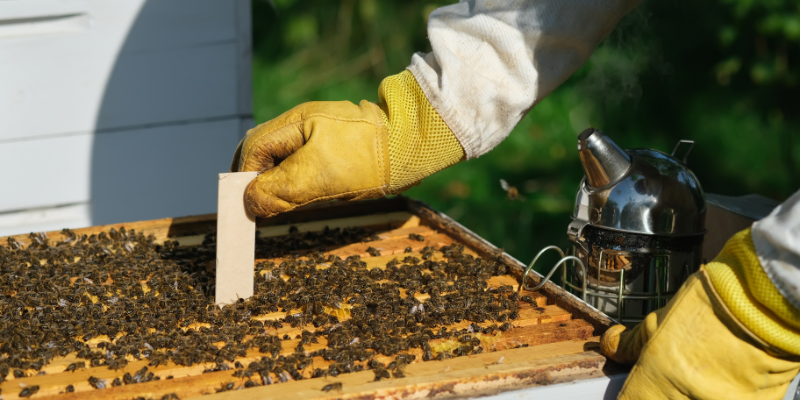
What a real on-farm trial looks like.
You don’t need a PhD. You don’t need a research budget. You need discipline.
Boiled down to what matters in a beekeeping operation:
- Be honest about the question you’re asking. “Does it kill mites” and “Is it cheaper and faster than what I do now” are different questions. Decide which one matters before you start.
- Pick one variable. Change the treatment AND the timing AND the queen line, and you’ll never know which one moved the needle.
- Run a control. Your current standard practice. No control means no comparison — just a story.
- Use enough hives. Two hives is anecdote. Twenty is a trial. Multiple yards with controls is a trial you can defend.
- Measure cost and labour, not just biology. Materials per hive. Minutes per hive at application and constructing the treatment. Number of return visits.
- Set a timeline. When does it go in? When do you check? When do you call it? If you don’t plan it, you’ll forget half the data points.
- Write everything down. Not in your head. Not on the back of a sugar bag. In one place. Same format every time.
- Be willing to find out you were wrong. If you’re only running the trial to confirm what you already believe, you’re wasting your time.
Worth noting: Randy Oliver developed the oxalic acid and glycerin method in California with strong results. When researchers in the southeastern US ran the same protocol, it didn’t work — different climate, different bees, different result. The only reason anyone knows that is because both groups did the measurements.
This is how you avoid the disaster.
A small trial that fails is a lesson. A whole-operation rollout that fails is a survival event.
If those thymol bricks turn out to take twice as long, interact badly with our autumn work flow, or burn through more product than I budgeted for — I’ve lost one yard and a season of brick-making time. I can pivot. Standard treatment goes back in. Lesson learned.
Roll them out across the whole operation? Thousands of hives, a labour bill I can’t justify, and varroa pressure I can’t walk back from before winter. Not a learning experience. A year wiped out.
Same logic for any new technique. Queen rearing method. Feed. Splitting strategy. Software workflow.
Test it small.
Measure the dollars and the minutes.
Then — and only then — scale it.
So before you commit:
Don’t bet the operation on a hunch.
Don’t scale what you haven’t costed.
Don’t skip the control because it’s inconvenient.
Run the trial. Set it up properly. Be honest about what the numbers tell you — even when it’s not what you wanted to hear.
A trial only works if the data gets captured cleanly and you can actually use it. Hive records, treatment dates, application times, inspection results — trial yard versus control yard, week by week — in one place. That’s where MyApiary earns its keep. The difference between reading the answer off the screen at the end of the season and trying to remember what you saw in November.
The beekeepers who survive the next decade won’t be the ones with the loudest opinions.
They’ll be the ones with the cleanest data.
Test small.
Or wear it big.