
News
Part 2: How to Master Cash-Flow this year
How to Build a Clear Cash-Flow Forecast for the year ahead
and stop the bank balance surprises.
Part 1 was about why cashflow forecasting matters; this article is about finally making it practical — without overcomplicating it.
You should know cashflow matters by now. You feel it every season. You see it when honey payments arrive later than expected, when costs stack up, or when a single unexpected invoice tightens everything at once.
What usually gets in the way isn’t understanding — it’s getting started.
That’s exactly why we created the MyApiary Cash-Flow Forecast Model.
Not as another generic spreadsheet. Not as an accounting exercise. But as a practical gift to help you see the season ahead with clarity, without having to build anything from scratch.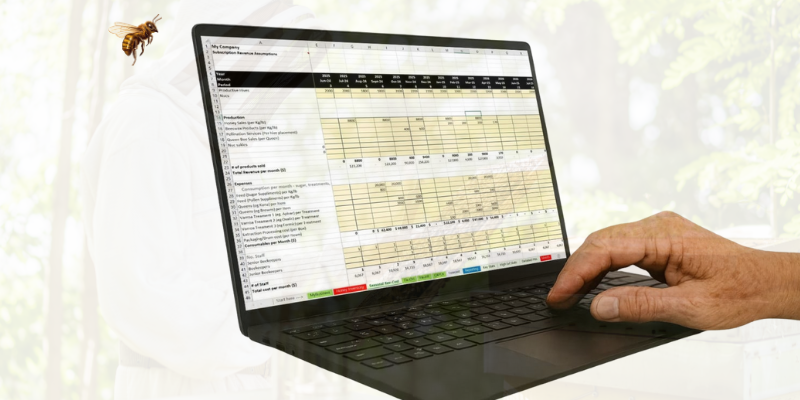
The real goal here isn’t complexity or perfection. It’s confidence.
Confidence to know when cash will be tight.
Confidence to set realistic sales targets.
Confidence to build buffers for bad seasons.
Confidence to make decisions before pressure forces your hand.
Download the MyApiary Cash-Flow Forecast Model here
We’re sharing this model as a free gift because it’s the fastest way we know to move you from guessing to clarity. Download it, plug in your numbers, and give yourself visibility before the season demands it.
Getting Started: The Four Things That Matter Most
1. Gather Your Base Data (Don’t Overthink This)
The biggest mistake people make at this stage is trying to be too precise. You don’t need perfect records to begin. If you already have accounting records, great. If not, estimates are fine — conservative estimates are better.
Start with simple things:
- Your current cash position (bank balances, debtors, creditors)
- Your inventory and production reality (Honey on hand. Expected harvest. Queen or nuc production capacity and overwintered queens, nucs, etc.)
- Your typical income sources (Honey sales, queen sales, pollination income, hive sales, contracts — whatever applies to your business.)
- Your known costs (feed, treatments, fuel, labour) and the ones that tend to sneak up on you (repairs, freight, packaging, compliance, insurance).
The aim is visibility, not precision.
Perhaps this is also a good time to bring a bookkeeper into your team. To help you create the discipline of reviewing your numbers every month. It doesn't have to be a full-time role, part-time 10-20 hours a month, possibly a contractors from our financial services business.
2. Build the Monthly Picture
Start dating All Inflows and Outflow — and Be Honest About Timing
This is where a forecast becomes powerful. Instead of just listing numbers, you assign them to months. This can be done in the spreadsheet template.
Many cash-flow problems aren’t caused by a lack of income, they’re caused by income arriving later than expected, while costs arrive right on time. Assigning inflows and outflows to months makes these gaps visible.
3. List the fix cost, including any new equipment you'd like to purchase!
This is where many forecasts fall over.
Make sure you include: Bank fees, interest, insurance, loan repayments, any software subscriptions (MyApiary, Accounting, etc), advertising, office or premise rentals, etc.
If it’s going to leave your bank account at some point during the season, it belongs here, even if it only happens once.
4. Be Conservative and Build a Real Buffer
This matters enough to say again. Underestimate income. Overestimate costs.
Not because you expect things to go wrong, but because you need a buffer large enough to carry you through a bad season. Weather, delayed buyers, rising costs and unexpected repairs don’t give you notice.
A conservative forecast doesn’t limit your business. It protects it.
If the season turns out better than expected, that’s upside. If it doesn’t, you’re still standing.
Common Pitfalls to Watch Out For
Even with a good model, there are a few traps worth avoiding:
- Being overly optimistic about payment timing, Honey sold is not honey paid for.
- Forgetting irregular costs, Insurance, tax, repairs, packaging and freight often get missed, until they arrive.
- Treating inventory as cash
Honey in the shed is potential, not liquidity untill you have sold it. - Building the forecast once and never revisiting it
A quick monthly check-in keeps it useful and relevant.
This forecast isn’t about controlling every outcome. Beekeeping will always involve uncertainty.
But uncertainty doesn’t have to mean surprise.
When you can see the season ahead, even imperfectly, you make better decisions. You sleep better. You talk to your accountant or bank earlier. You plan with intention instead of reacting under pressure.
That’s why we’ve shared this model with you.
Use it as a guide. Adjust it as you learn. Let it evolve with your business.
Because confidence doesn’t come from guessing.
It comes from being prepared.