
News
Busy is Not the Same as Progressing
Hunting Season vs. Mastery Season
The first stage most successful commercial beekeeping operations navigate can be described as the Hunting Season. These foundational years are defined by saying “yes” to virtually every opportunity that comes your way.
When a landowner offers a new site, you take it. If a grower requests hives for pollination, you give it a go. Rearing queens, collecting pollen, selling nucs, or packing your own honey—it is all fair game as you test different revenue streams to discover what the enterprise could become. You are building hive numbers, expanding your crew, and generating enough turnover to turn a few hives and a ute into a legitimate commercial business. It is tough labor, but seeing 300 hives grow into 800 offers clear, satisfying progress. Eventually, clients and landowners start ringing you. You have taken blind optimism and built something proper.
The mistake is assuming the next phase requires simply doing more of the same. At this stage, you must ask yourself: What are you actually trying to achieve? Are you actively trying to expand, streamline what you have built, or scale back to focus purely on high-margin work? There is no wrong answer, but you must choose deliberately.
Choosing Your Strategic Direction
Your next chapter must be chosen intentionally:
If expanding: Select the exact model, sites, and crops you want to scale before adding hives and staff. Build a system capable of carrying that growth without every decision running through you.
If streamlining: Focus on achieving similar turnover with healthier margins, better colony strength, clearer plans, and less seasonal panic.
If downsizing: Dropping marginal sites and concentrating on your best activities often delivers both a better business and a better lifestyle.
Breaking the Rescue Addiction
Beekeepers, you are natural problem-solvers. When a hive goes queenless, you fix it. When weather turns, you alter the schedule. When an extractor breaks down mid-harvest, you pull it apart and fix it. You spend years becoming the person who saves the day, and there is pride—and a subtle addiction—in that.
When operations begin running smoothly, it can feel like you are not working hard enough. The temptation is to add a few hundred extra hives or take on marginal sites just to recreate the familiar chaos. But being busy and making progress are not the same thing. Mastery requires building systems that prevent problems, empowering your team to make decisions, and stepping out of the center of daily emergencies.
You Cannot Master What You Cannot See
Before the next season takes off, rank every major site, crop, customer, and revenue stream by its true net value. Do not rely on raw yields or invoice totals. Look at profit per hive and margin per activity, factoring in labor, travel, feeding, treatments, site costs, extraction, packing, and colony losses.
If this operational data has not been captured as work happened, making informed decisions becomes nearly impossible. You end up relying on memory, gut feel, or whichever client paid the largest invoice.
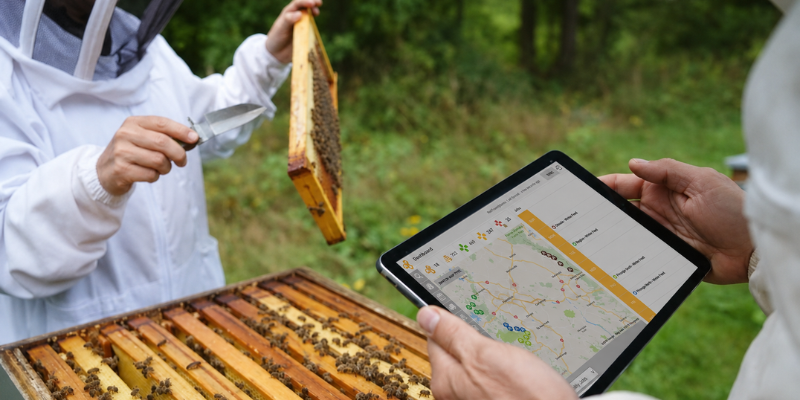
This is where MyApiary fits in. MyApiary helps build the historical data needed to compare sites, activities, crews, and yields accurately. By moving field records out of notebooks, spreadsheets, and text messages into a unified system, your team captures data consistently. This provides the operational visibility required to decide what to scale, what to perfect, and what to finally let go.
Because you cannot master what you do not measure.